
Thermal Spray vs HVOF vs Ceramic Coatings
How traditional thermal spray, HVOF tungsten carbide, and ceramic coatings compare against the AEGIS fluoropolymer system across bond mechanism, service life, field deployability, and total cost of ownership.
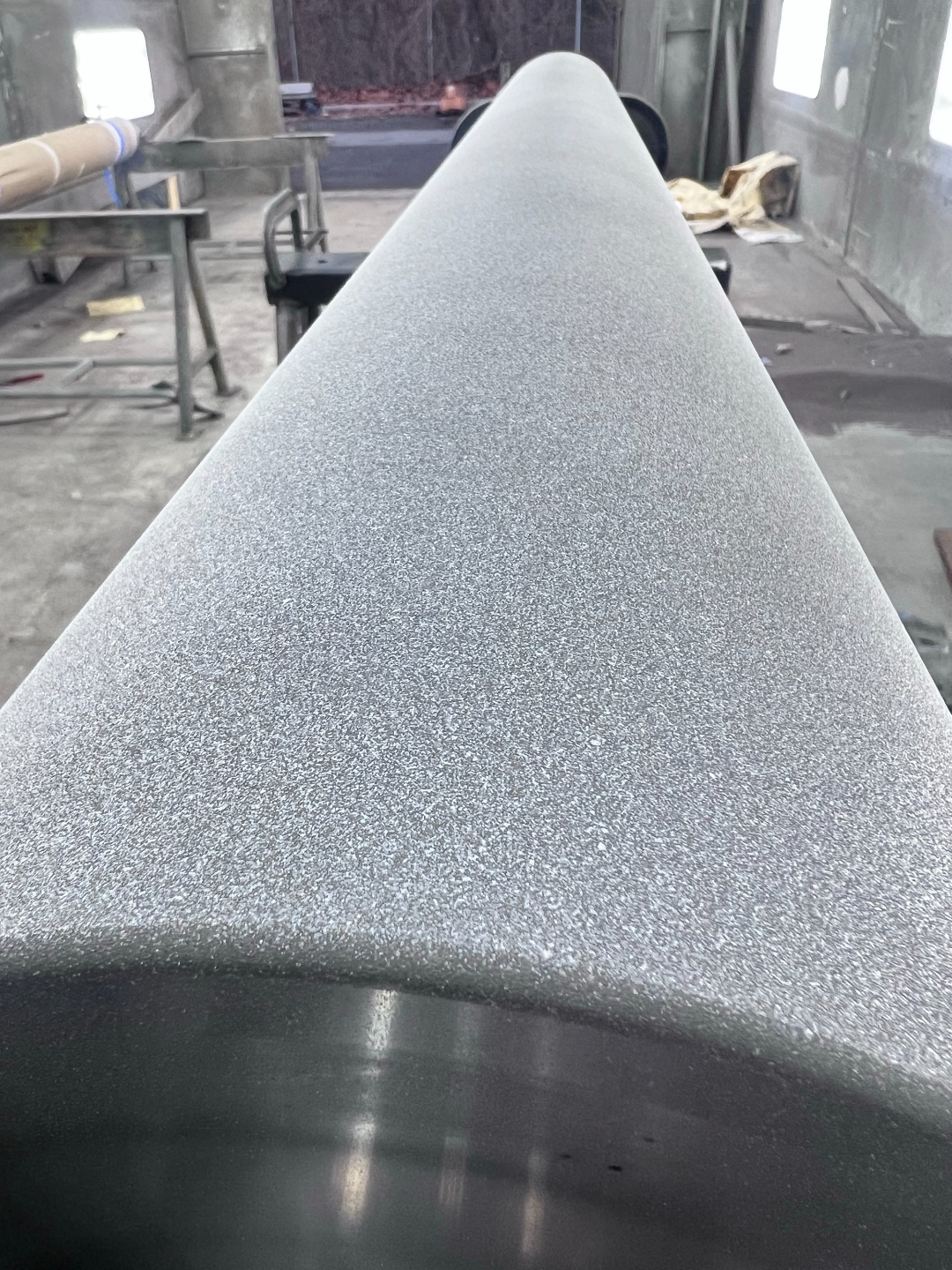
How the technologies differ
Each of these technologies solves a different problem at the bond line.
- Traditional thermal spray deposits a sacrificial or wear resistant metallic layer. The bond is mechanical, set by grit blast profile. Common chemistries: zinc, aluminum, nickel chrome, stainless.
- HVOF tungsten carbide uses high velocity oxy fuel to spray dense, hard tungsten carbide. The bond is mechanical with very high cohesion in the deposit. Excellent abrasion resistance, no release function, no chemical bond to the substrate.
- Ceramic spray deposits chromium oxide, alumina, or other ceramics. Hard, high temperature, brittle, and prone to chip on impact loading. Mechanical bond.
- AEGIS fluoropolymer with tungsten carbide reinforcement embeds PTFE in a tungsten carbide matrix over precision energy surface preparation. Chemical bond to the substrate, abrasion resistance from the carbide, release and chemical resistance from the fluoropolymer. One coating that solves three failure modes.
Side by side comparison
| Capability | Traditional thermal spray | HVOF tungsten carbide | Ceramic spray | AEGIS |
|---|---|---|---|---|
| Bond to substrate | Mechanical | Mechanical | Mechanical | Chemical |
| Abrasion resistance | Moderate | Excellent | Excellent (brittle) | Excellent (tough) |
| Release / non stick | None | None | Low | Excellent |
| Chemical resistance | Limited | Limited | Limited | Excellent |
| Field deployable | Yes, heavy | Yes, heavy | Yes, heavy | Yes, mobile |
| Hazardous waste | Grit blast stream | Grit blast stream | Grit blast stream | None |
| Substrate damage | Grit blast degradation | Grit blast degradation | Grit blast degradation | None |
| Recoat path | Strip, re grit, re spray | Strip, re grit, re spray | Strip, re grit, re spray | Strip, re prep, re coat |
When traditional thermal spray is the right call
Thermal spray is the right answer for some applications. AEGIS will tell you when, instead of selling against it.
- Sacrificial galvanic corrosion protection where zinc or aluminum metallic anode behavior is needed (think large structural steel in marine atmosphere).
- Bulk metallic buildup for dimensional restoration on worn shafts and journals.
- Pure abrasion resistance with no chemical or release requirement, where HVOF carbide is the simplest answer.
- Service environments where fluoropolymers are not chemically appropriate (very high temperature continuous service above 750°F).
When AEGIS is the better economic answer
- Combined failure modes: corrosion plus release, or wear plus chemical attack, or release plus low friction. AEGIS solves multiple modes in one coating.
- Service environments where grit blast contamination at the bond line is the actual root cause of premature coating failure.
- Complex geometries: threads, pockets, internal radii, and tight clearances where line of sight thermal spray cannot reach uniformly.
- Onsite work where you cannot mobilize the heavy footprint of a thermal spray rig.
- Food contact, pharma, or hazardous environment work where grit blast contamination and hazardous waste are disqualifying.
How to choose
Send AEGIS the asset details. We will spec the system, and we will tell you when traditional thermal spray, HVOF, or ceramic is the better economic answer. We are not trying to sell you a coating you do not need.
Frequently asked
Is HVOF tungsten carbide better than AEGIS for abrasion?
For pure abrasion with no chemical or release requirement, HVOF carbide is dense and very hard. AEGIS adds release and chemical resistance to the same wear protection, so the question depends on what else needs to be solved at the surface.
Can AEGIS replace ceramic coatings?
In many cases yes. AEGIS gives chemical and release performance that ceramics do not, with a chemical bond instead of a brittle mechanical bond. For pure high temperature dielectric service, ceramic may still be the right call.
What about thermal spray over AEGIS for hybrid systems?
Hybrid stacks are possible. AEGIS engineering can spec a base thermal spray with an AEGIS topcoat where the application calls for it. Send the asset details.
How does cost compare across these technologies?
Per square foot, traditional thermal spray is often cheaper. Per service hour over the asset life, AEGIS is often cheaper because the bond line does not fail first. We quote both per square foot and expected service life so the math is visible.
Is AEGIS NACE or ISO certified?
AEGIS coatings have been tested to ASTM B117 (4,000 hour salt spray) and ASTM D870 (water immersion). Specific NACE and ISO conformity statements are available on request for your application.
Spec the right coating for your asset
Send us the substrate, the service environment, and what is currently failing. We will spec the right system, AEGIS or otherwise.